JCP Technology to Market · since 1986

Consortium architect

Integrating international partners into European research projects

JCP helps companies, universities and research institutes from China, India, the Gulf and Africa assess whether and how they can contribute to a European research project. We verify the applicable participation and funding route, prepare a partner profile, identify relevant coordinators and help define a useful, deliverable role. Every conclusion is call-specific; participation and funding remain decisions of the consortium and granting authority.

Switzerland associated to Horizon Europe, effective 1 January 2025 Representing foreign companies in Europe since 2006
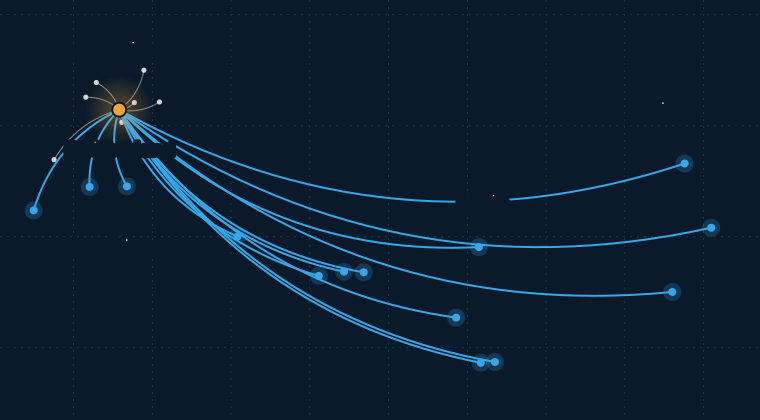
Map: corridors from China, India, the Gulf and North Africa to Switzerland and the European research area.

The opportunity

European research is open to the world, under precise rules.

Many non-EU organisations can participate in Horizon Europe, but eligibility, role and funding depend on the action, call, country and ownership or control. Getting this right before the proposal is written is the work of a consortium architect.

2025Switzerland associated to Horizon Europe, with retroactive effect from 1 January
€605mHorizon Europe Africa Initiative IV, about 30 calls in 2026–2027
33African countries take part in Global Health EDCTP3; Switzerland is also a member
4North African countries eligible for EU funding: Egypt and Tunisia as associated countries, Morocco and Algeria automatically

Rules by region

What applies to your organisation

Status checked: 5 October 2026. Rules change with each work programme; we check them again for every call.

China

In principle not eligible for research and innovation actions

  • For the 2026–2027 Horizon Europe work programme, legal entities established in China are in principle not eligible to participate in Innovation Actions or Research and Innovation Actions unless the applicable work programme or call explicitly provides otherwise.
  • Some critical-technology calls also restrict entities established in otherwise eligible countries where they are directly or indirectly controlled from China. Universities linked to China’s Ministry of Industry and Information Technology are subject to an additional exclusion.
  • Where a topic is explicitly opened, Chinese participants are not funded automatically; China’s science ministry has co-funded its participants in selected areas.
  • Switzerland and China: science and technology agreement since 1989 and an Innovative Strategic Partnership since 2016; swissnex in Shanghai.

JCP’s role: check call by call whether a topic is explicitly open, and whether participation as an associated partner with own resources is possible. Every opportunity is checked at call level.

India

Co-funding for selected topics, association under negotiation

  • Not funded automatically; Indian ministries co-fund their participants in selected topics, for example the Ministry of Heavy Industries in 2026. The EU–India Trade and Technology Council runs co-funded calls on green technologies.
  • Formal negotiations on India’s association to Horizon Europe opened on 17 July 2026, with the stated aim of concluding them before the end of 2026 and association from 2027. Until association applies, participation and funding must be assessed under the current third-country and call-specific arrangements.
  • Switzerland and India: science and technology agreement since 2003, more than 300 joint SNSF projects since 2016, swissnex in Bengaluru; EFTA–India trade agreement in force since 1 October 2025.

JCP’s role: identify topics with Indian co-funding, prepare the partner profile and approach coordinators of relevant calls.

Gulf states

Own funding, new strategic partnerships with the EU

  • No Gulf state is associated or funded automatically; organisations from the region take part with their own resources, often as associated partners.
  • The EU is negotiating Strategic Partnership Agreements covering research and innovation with the UAE, Qatar and Bahrain; Kuwait and Oman have agreed to start.
  • EFTA–GCC free trade agreement in force since 2014; Swiss Leading House for the Middle East and North Africa at HES-SO.

JCP’s role: present Gulf companies and institutions as partners bringing data, test sites, markets or co-financing, and help define a role the consortium needs.

Africa

The widest access to EU funding outside Europe

  • Egypt and Tunisia are associated to Horizon Europe; Morocco and Algeria are funded automatically; all take part in the PRIMA Mediterranean partnership or are joining it.
  • South Africa, Kenya, Nigeria, Ghana, Senegal, Rwanda and Ethiopia are funded automatically; South Africa adds national co-funding and can coordinate EDCTP3 projects.
  • Africa Initiative IV: about 30 calls and €605m in 2026–2027; EU–Nigeria science agreement under negotiation since February 2026.

JCP’s role: help consortia include European and African partners from the start, so that African participation is funded and substantial.

Sources: Horizon Europe 2026–2027 General Annexes; European Commission, Switzerland and India. Status checked: 5 October 2026.

Routes into a project

Possible participation routes

Which route applies is defined by the programme and the call, never by preference.

Beneficiary

A participant that accedes to the grant agreement and may receive funding where the programme and call permit.

Associated partner

A named project participant that performs defined work without receiving the EU contribution.

National or other co-funding

Participation financed through a national scheme or the organisation’s own resources, where the call permits.

Established European or Swiss entity

A genuine operational entity may be eligible under local rules, but must perform the work and satisfy ownership, control and operational-capacity requirements. It is not a workaround for restrictions.

Addition to an ongoing project

Possible only where the consortium has a justified need and the granting authority approves an amendment of the grant agreement.

Project open call

Some funded projects run open calls for third parties; each call defines its own geography, funding and eligibility.

Method

How we work

  1. Call-specific screeningParticipation and funding route, ownership and control, sanctions and export-control information.
  2. Partner propositionWhat your organisation brings to a project, in the coordinator’s terms.
  3. Targeted coordinator outreachA prioritised list of coordinators; introductions where mutual interest is confirmed.
  4. Role, effort and financing designA useful, deliverable role, discussed with the coordinator.
  5. Documentation and delivery supportPortal registration, letters, consortium agreement questions, reporting support.

Why a Swiss consortium architect

A neutral base inside the European research area

  • Switzerland officially became associated to Horizon Europe on 10 November 2025, with retroactive application from 1 January 2025. Swiss participation remains subject to the conditions of each call, including any specific restrictions.
  • Switzerland has its own science and technology agreements with China (1989), India (2003) and South Africa (2007), and science counsellors in Beijing, New Delhi, Nairobi and Pretoria.
  • JCP has represented foreign companies in Europe since 2006 and works in English, French and German.

Compliance

Checked before, not after

Screening covers the applicable programme rules and publicly available sanctions, ownership and control, and export-control information. Legal, sanctions and export-control opinions are provided only by qualified specialists.

  • EU, Swiss and US sanctions lists, including ownership and control
  • Export-control rules on dual-use goods and technology, including the transfer of know-how
  • Ownership-control restrictions in strategic Horizon Europe calls

A European or Swiss subsidiary is not a workaround for programme restrictions. It must be a genuine operational entity, perform the project work and satisfy eligibility, ownership and control requirements.

Inside the consortium

How JCP can contribute

As an eligible Swiss organisation, JCP can in principle participate where the call, consortium role and operational capacity justify it, for example with a bounded task in market validation, communication, dissemination or exploitation. Its role, effort and relationship with any related company are disclosed and costed separately.

JCP has not yet led a work package in a Horizon Europe project. Where JCP is a participant in a project, it does not act as a paid adviser to the same project.

Our commitments

Clear terms

  • Fixed fees agreed in advance; any success fee is optional, moderate and agreed in writing
  • No clauses on intellectual property, equity or exclusivity in our consulting contracts
  • Proposal-development consultancy is not charged to a grant. Work performed after grant signature is charged only where it is an eligible, documented project task under the applicable agreement.
  • No promise of participation or funding: consortia and evaluators decide independently, and we say so
  • JCP’s contracting principles are aligned with the transparency and client-protection principles of the EIC Board Code of Conduct for consultants